
How cartridge identification works.
Identifying the right faucet cartridge is the hardest part of any cartridge replacement job. Not the install, not the order, not the shipping. Our process is built around what specialists actually look at when they read a cartridge: threading pattern, spline count, body geometry, manufacturer stamps, and seal details.
In a hurry? Read the three-step overview instead. This page is the long version. Want to read the part yourself? Our cartridge identification guide teaches the method.
Free to use. You only pay for the part.
Already have an account? Log In
Download on the App StoreCartridge out of the valve, on a flat surface, ruler in frame. About 60 seconds.
Human eyes, not a vision model. Threading, broach, length, splines, seals, stamps.
Match confirmed, quote attached. Order it and the part number comes with it.
Jobsite, shop, or truck. 3-5 days standard, Next-Day at checkout.
Photo guide
What makes a good identification photo
The clearer your photo, the faster your identification. Place the cartridge on a flat surface next to a ruler, with the model code facing up if you can see one.
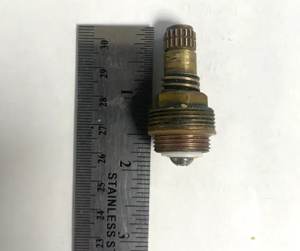
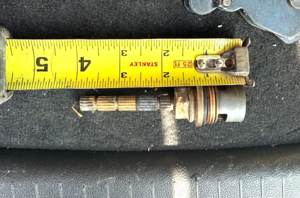
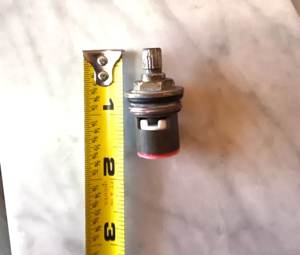
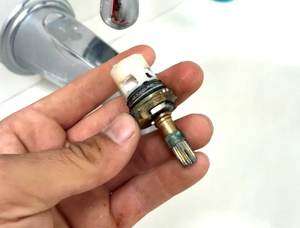
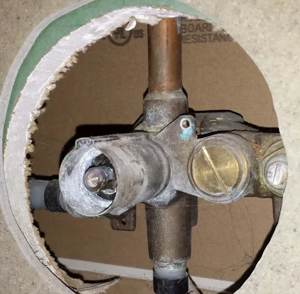
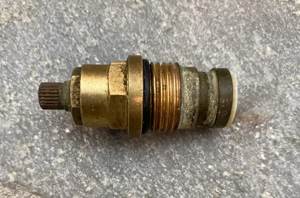
What to photograph
Four cartridge types. Two photos each.
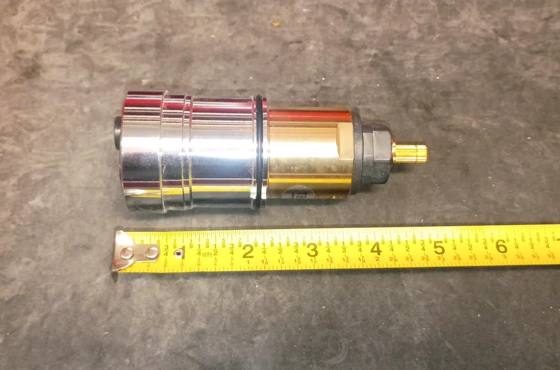
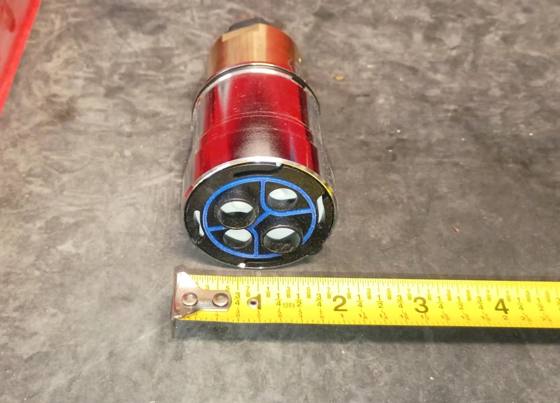
Every submission starts the same way: pull the cartridge, lay it on a flat surface next to a tape measure or ruler. What you shoot next depends on what you pulled. These are the same instructions the app walks you through.
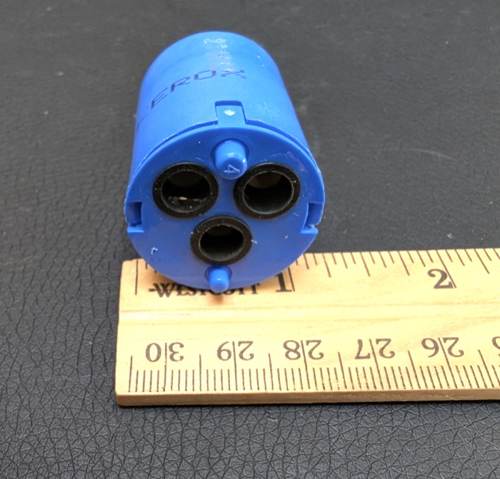
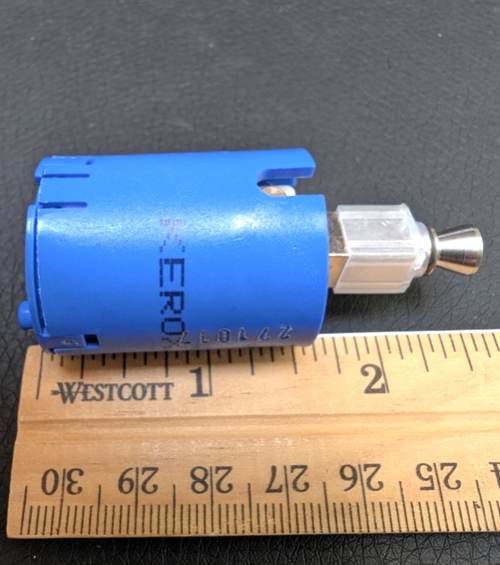
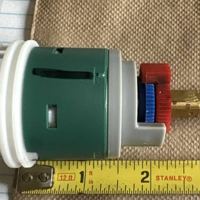
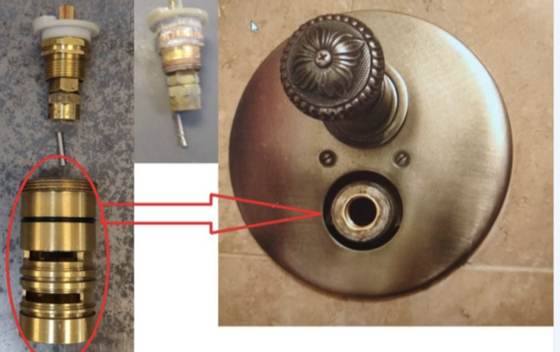
Many pressure-balance style cartridges leave a balancing spool behind in the valve body. Pull the spool too and lay it next to the tape. The spool is what confirms which replacement style your valve takes. Without it we have to pause the match and send you back to the valve.
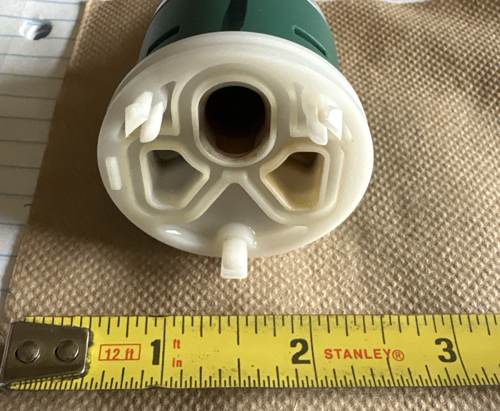
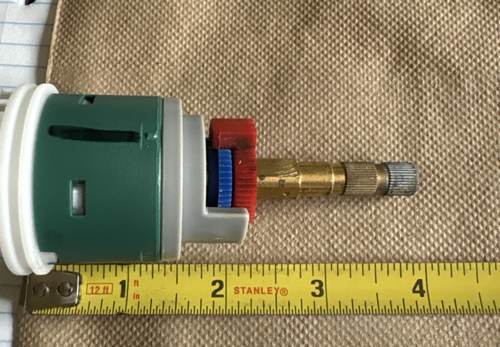
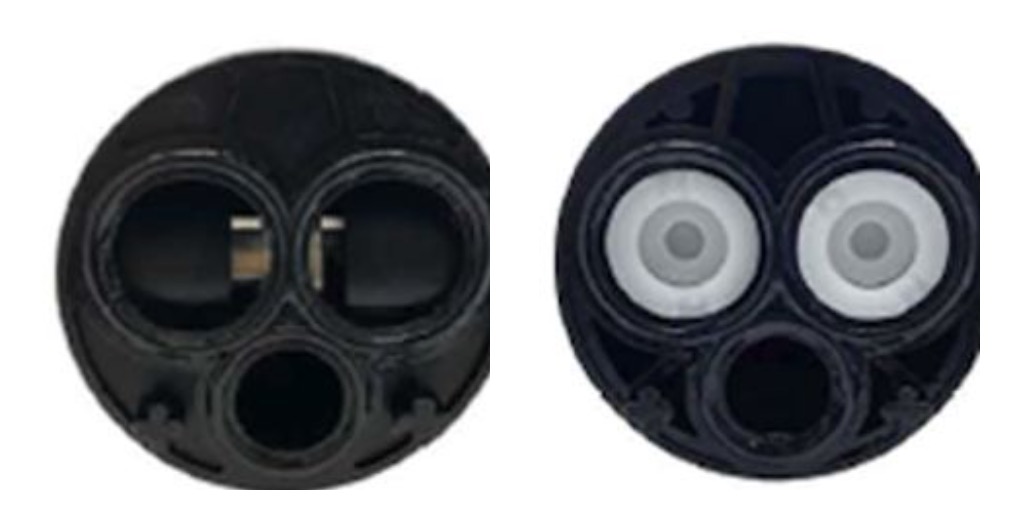
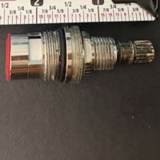
If you know the spline count or which direction it turns off, tell us in the ticket chat after you submit. It speeds things up.
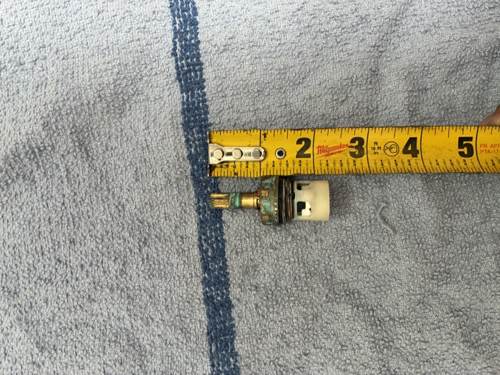
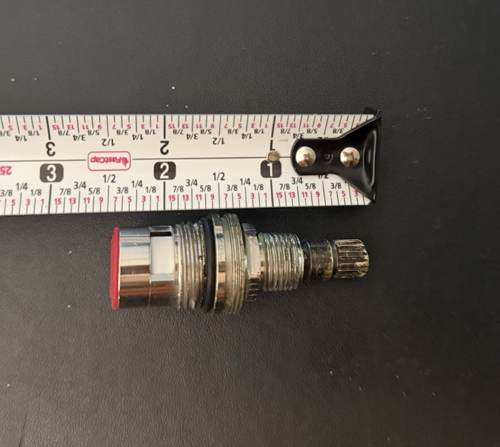
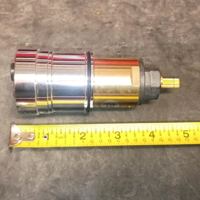
The most common miss on this type. If half the cartridge is still in the valve it can't be matched yet. Photos of multiple pieces laid out next to a tape measure are perfect.
The long version
Every step of the cartridge identification, in detail
Step 1. Submit your cartridge photo
You upload one or more photos of your faucet cartridge through the CartridgeID app or web submission form. The best identification photos show the cartridge removed from the valve, placed on a flat surface, with a ruler or tape measure visible for scale. You don't need to know the brand or model. That's our job.
You can optionally note the rotation direction (clockwise or counter-clockwise to shut off) and the spline count if visible; both speed up identification but aren't required.
Step 2. Specialist verification
A trained CartridgeID specialist reviews your photo. We don't rely on AI alone for identification. Vision models can confidently match visually similar cartridges that have different internal geometries, which is exactly the failure mode that gets the wrong part shipped.
Our specialists check threading pattern, stem broach, body length, spline count, seal arrangement, and any visible manufacturer stamps against the manufacturer cartridge catalog. We confirm the exact part number, not just the family. If features are ambiguous, we'll request a better photo before guessing.
Step 3. Get the exact replacement cartridge
Once your cartridge is identified, we match the replacement from our supply network and provide a quote. You approve the quote, place the order, and the cartridge ships to the address you specify, typically the jobsite. The identification is included with your part order. If a part is rare or discontinued, we tell you upfront what your options are.
Why specialist-led identification beats AI-only or self-lookup
Vision-based AI tools see "green cartridge, Moen-style body" and confidently match the wrong family. Self-lookup tools assume the plumber already knows the model number, which is the hardest part of the job to begin with. Specialist identification catches the differences that matter: cartridges that look identical to a vision model but have different internal geometries.
The wrong one drips. The cost of a cartridge plus a return trip dwarfs the time saved by skipping verification. CartridgeID is 100% human. Our team's only job is cartridge identification.
What happens when we're not sure
If your cartridge is genuinely ambiguous (sometimes two cartridges are dimensionally identical but have different O-ring specs) we'll tell you. You'll get a note on the quote flagging it, and we'll include the extra detail (e.g., "confirm the cold-side o-ring is red vs. black before ordering"). Better to give you the real answer than a confident wrong one.
Real orders, real people, real matches
Plumbers & homeowners“Quick and identified the cartridge first go! Will use again as a plumber being out in the field”
“These guys are great, able to identify the cartridges from a photo when four suppliers could not find them. Great service”
“I received the cartridge and it worked perfectly. So glad to have found you on the internet, I wasn't having any luck finding it anywhere. Your photo ID is really great.”
“Dude this app is awesome! I've always hated hunting cartridges down. We'll be using this a lot”
“I was quite pleased. They spent so much time working with me.”
“Appreciate how quickly you respond”
“Thanks for making it easy!”
“Where were you 5 years ago when I just started?!”
“Oh man, this is gonna save me so much time.”
“Oh man I could have used this today. Glad I know about it now.”
Frequently asked questions
Questions we get on the process
Can I identify a cartridge without removing it from the valve?+
Sometimes, but the success rate drops significantly. Installed cartridges hide the body length, the manufacturer stamp position, and often the threading pattern. Removing the cartridge takes about 30 seconds with the right tool and saves you a back-and-forth on identification.
Do I need calipers to send measurements, or is a tape measure enough?+
Tape measure is enough for first-pass identification. We rarely need calipers in the first round. The threading pattern and spline count usually narrow the candidate list before millimeter-level precision matters. If we need a caliper measurement, we'll ask specifically.
What information should I include with the photo besides the cartridge itself?+
The host faucet brand if you know it. The rotation direction the cartridge turns to shut off (clockwise or counter-clockwise). The spline count if you can see the splines clearly. None of these are required, but each one shortens identification time.
Why does threading pattern matter so much?+
Threading pattern (whether the lower body has a single thread or both a lower thread AND a secondary thread above the splines) splits high-end cartridges into two completely different families before any other measurement. The two families are visually similar but never interchange.
Do you identify shower cartridges differently from faucet cartridges?+
The methodology is the same, but the candidate list differs. Shower cartridges tend to be larger and pressure-balanced or thermostatic. Faucet cartridges are typically ceramic disc or compression. See our shower cartridge identification page for shower-specific details.